
LAST WEEK’S KEY FACTORS AND MAIN TRENDS
IN THE DEVELOPMENT OF THE SITUATION AROUND UKRAINE
(April 24–May 02, 2017)
І. Major-Profile Events in the Development of the Situation around Ukraine
April 26, 2017, the Committee of Permanent Representatives in the European Union approved a decision to grant visa-free regime to Ukraine. The next and, in fact, the last step on this path should be the approval of this issue by the Council of Ministers of the EU in May this year. Thus, the European Union has confirmed its support for Ukraine and recognized the success of reforms in our country.
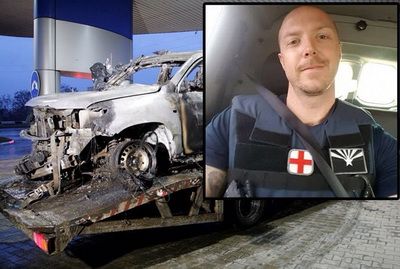 Against this background, at the end of April this year there was another spike in tension between the West and Russia. The reason was the April 23 attack in the so-called “LPR” on the patrol of the OSCE Special Monitoring Mission (SMM); the evidence by the French special services of the fact that the Assad regime did use chemical weapons in Syria and the new cases of Russia’s interfering with the computer networks of Western countries, in particular, during the preparation of the presidential elections in France.
But the most headline-making was the explosion of the SMM patrol car, which was a continuation of Russia and its Donbas puppets’ systematic pressure on the OSCE Mission. As stated by the First Deputy Chairman of the SMM Alexander Hug, since the establishment of the Mission in January 2015, there have been about 200 firing cases in the direction and near the patrols of the OSCE Mission monitoring the ATO zone. At the same time, A. Hug pointed out the purposeful nature of the terrorist attack against the SMM patrol car on 23 April with the use of selective weapons.
Such actions of Russia have been severely condemned by Western countries and international organizations. At the same time, the USA, NATO, EU and some Western countries have demonstrated their support to Ukraine.
The USA. The invariability of Washington’s attitude to the actions of V. Putin’s regime was confirmed on 23 April 2017 by Rex Tillerson, US Secretary of State, in his telephone conversation with President of Ukraine Petro Poroshenko. Secretary Tillerson confirmed that sanctions against Russia will remain in place until Russia fulfills the Minsk Agreements and returns the Crimea to Ukraine. The President of Ukraine, in connection with the terrorist attack on OSCE representatives, emphasized the importance of more active considering the issue of introducing an international peacekeeping contingent into the conflict zone under the auspices of the United Nations.
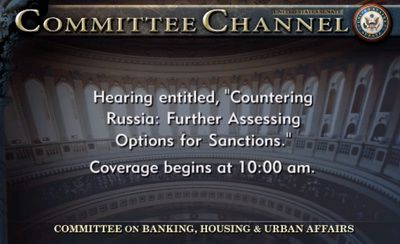 A tougher stand against Russia was demonstrated by members of the US Congress during the Senate hearings of 27 April 2017 entitled “Countering Russia: Further Assessing Options for Sanctions”. Discussing this issue, Russia was called “the most dangerous enemy of the United States in the world”, as well as “the main source of instability in Europe”. In this context, it was stressed that Russia does not comply with the Minsk Agreements, which was the main reason for the incident with the SMM OSCE patrol car.
Therefore, the need was stated “…to establish a clear “red line” for Russia, and to explain to the Kremlin what consequences will follow its crossing”. In this regard, most of the participants of the hearings spoke in favor of continuing targeted sanctions against the Russian Federation. Besides, some senators were in favor of providing lethal weapons to Ukraine.
NATO. NATO Secretary General J. Stoltenberg at the meeting of the Ukraine-NATO Commission on 25 April 2017 spoke similarly about Russia’s actions. He reaffirmed NATO’s strong support for Ukraine, and further assistance in strengthening the Armed Forces of Ukraine and its entire defense sector. This support will be evidenced by the visit to Ukraine of the delegation of the North Atlantic Council in the summer of this year.
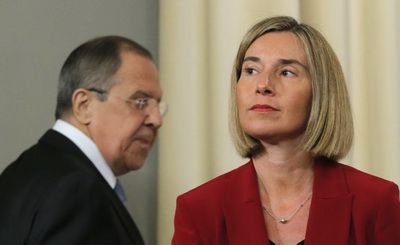 The European Union. The leadership of the EU has also demonstrated its negative attitude to Russia’s policy. According to the EU High Representative for Foreign Affairs and Security Policy/Vice President F. Mogherini during her meeting with Russian Foreign Minister S. Lavrov on 24 April 2017, it is Russia that bears the main responsibility for the violation of the Minsk Agreements. At this, she emphasized the EU’s principled position on the non-recognition of the legality of Russia’s annexation of the Crimea, and maintaining the sanctions against it until the settlement of the situation around Ukraine. Summing up the talks, F. Mogherini pointed out the existence of deep contradictions between the EU and Russia over key issues of international security, and once again stressed that the resumption of strategic cooperation between Brussels and Moscow is impossible without a change in Russia’s policy.
A similar opinion was expressed by the participants of the International Round Table on “EU Global Strategy: Place, Role, and Contribution of Ukraine”, which took place on 24 April 2017 in Kyiv. According to the head of the European Union’s delegation to Ukraine, H. Mingarelli, the EU demands from Russia to fully implement the Minsk Agreements, and only after that a dialogue would be possible with it on the issues of joint struggle against terrorism. At the same time, he pointed out that Moscow’s attempts to undermine the unity of the EU have failed. H. Mingarelli emphasized the importance of Ukraine as a priority partner of the EU in the spheres of politics, economy and security. The basis for such a partnership, he said, is the Association Agreement between Ukraine and the European Union. Taking into consideration the existing common interests, H. Mingarelli expressed the EU’s firm intention to further assist Ukraine in its reform and strengthening the Ukrainian economy.
Ukraine has also been supported by representatives of some leading Western countries (in particular, the Foreign Ministers of Canada H. Freeland and of Great Britain B. Johnson) also have supported Ukraine and condemned Russia’s actions.
II. Russia’s Armed Aggression against Ukraine
Despite the obvious failure of Russia’s policy on the Ukrainian direction, the leadership of the Russian Federation is trying not to recognize this by persistently supporting tension in the Donbas and consolidating Russian positions in the Crimea.
In particular, this is evidenced by the attitude of the leadership of the Russian Federation to the initiative of the leadership of Ukraine to deploy the UN peacekeeping mission in the Donbas as the main guarantee of preventing the expansion of the scale of the conflict. According to the press secretary of the Russian President D. Peskov, this issue should be agreed with the leaders of the “DPR” and “LPR”, who, by the way, have openly opposed this.
Also, Moscow has actually refused to comply with the decision of the UN International Court of Justice, which obliges it to refrain from restrictions on the activities of the Mejlis of the Crimean Tatars. Commenting on this decision, Russian Foreign Minister S. Lavrov promised that Russia would “continue to fight extremists in the Crimea”.
2.1. The East of Ukraine (the ATO zone)
The consequence of such Russia’s policy was the quite predictable ineffectiveness of the meeting of the Tripartite Contact Group in Minsk on 26 April 2017, where preliminary results of the investigation of the attack on the patrol car of the OSCE Mission were considered. In fact, the parties only agreed on the continuation of the work of the subgroup on security issues.
Against this background, after the Easter holiday, Russian-terrorist forces have stepped up the firing of the ATO forces’ positions and civilian settlements with an average intensity of more than 50 per day. The most difficult situation is still observed in the Avdiivka area and on the Primorskyi direction.
It should be noted that the actual shutdown of Ukrainian enterprises that were “nationalized by the authorities” of the “DPR” and “LPR” complicates the economic situation in the self-proclaimed republics. It is only natural that the separatists’ hopes for economic assistance from Russia were also in vain. Thus, Deputy Minister of Economic Development of the Russian Federation S. Nazarov has stated that “…Russia does not need coal from the “DPR” and “LPR”. Moreover, Moscow is not able to support its own coal enterprises in the South of the country (in particular, in Rostov region), which went bankrupt because of non-competitiveness of their products.
2.2. The Crimean Peninsula
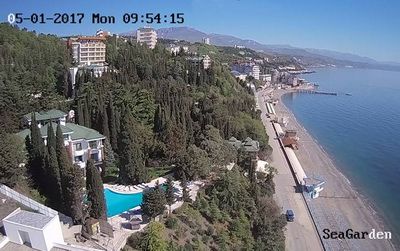 With the approach of the holiday season, topical is becoming the issue of the Crimea’s attractiveness for tourists. In this regard, Russian citizens’ interest to the Crimea after a temporary period of euphoria of 2014–2015 is steadily declining. According to independent experts, the reason is the Crimean resort base’s being unable to compete with the resorts of other countries, including Turkey, Egypt and Bulgaria. For example, a holiday in the Crimea is more than three times more expensive than in Turkey, and quite incomparable in the quality of service.
Besides, an additional problem for the tourist industry in the Peninsula is the activities of the occupation authorities’ measures to strengthen the police regime. This discourages tourists, especially young people. In fact, rest in the Crimea attracts only those Russian citizens who do not have the right to travel abroad (including military personnel, persons with debts, etc.).
2.3. Other Aspects of the Russian Federation’s Actions against Ukraine and the West
V. Putin’s regime is trying to pressure Ukraine with the help of an energy factor. According to A. Miller, the head of the Russian “Gazprom” company, due to the plans to introduce the “Nord Stream-2” export gas pipeline, from 2019 Russia can reduce by several fold the volume of gas transportation through Ukraine. This way, Russia in fact will not be dependent on the Ukrainian gas transportation system, and Ukraine will lose the opportunity to influence Russia in the field of gas transit. In addition, “Gazprom” has increased claims to the “Naftogaz of Ukraine” company in an Arbitration Court in Stockholm from 31.7 billion US dollars to 37.0 billion US dollars for gas supplies in 2013–2014.
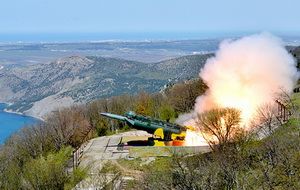
The Russian Federation’s active military actions near the borders of Ukraine and in the occupied Crimean Peninsula continue. Last week, the trainings of a Separate Missile and Artillery Brigade took place in the Crimea with practical launches of the cruise missiles of the complex “Utes” (the complex was captured from the Ukrainian Armed Forces during Russia’s occupation and annexation of the Crimea in 2014).
 |
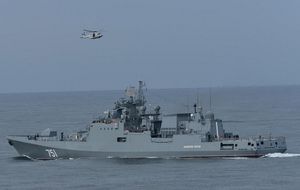 |
The naval composition of the Black Sea Fleet of Russia is also being increased. After the completion of the sea tests, the new Black Sea Fleet frigate (Project 11356) “Admiral Essen” was included in the Black Sea Fleet. At the moment the ship is heading from the Baltic Sea to Sevastopol.
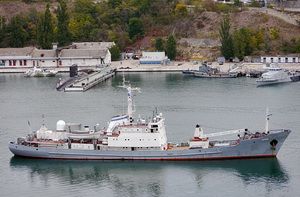
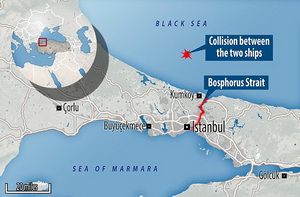
At the same time, the real state of affairs in the Armed Forces of the Russian Federation was shown by the incident with the intelligence ship “Liman” of the Black Sea Fleet of Russia (heading to fulfill tasks near Syria), which sank on the approach to the Bosphorus Strait on 27 April 2017 as a result of a collision with a civil cargo ship. This fact testifies to both, the low level of training of the crew of the ship, and to the unsatisfactory state of its radio navigation equipment. The relevance of such problems was also confirmed by the combat use of the aviation group of the heavy aircraft-carrying cruiser “Admiral Kuznetsov” in the Russian operation in Syria. Due to technical malfunctions of the special equipment of the ship, two deck aircraft were lost.
 |
 |
In total, as a result of the Putin regime’s military adventure in Syria, Russia has already lost: about 40 servicemen (according to independent sources — up to 70); five helicopters — two Mi-8AMShT, two Mi-35M and one Mi-28; three aircraft — Su-24 (shot down by the Air Forces of Turkey) and deck MiG-29 and Su-33; and now the “Liman” intelligence ship. At this, Russia was unable to achieve its strategic goals of renewing cooperation with the West on the basis of a joint fight against terrorism, and providing real support to B. Assad’s regime.
The fact of the forced major repair of the aircraft-carrying cruiser “Admiral Kuznetsov” after the campaign to Syria is also quite indicative. The cost of the repair work, which is planned to be carried out in the period of 2017–2020, is estimated at 40 billion rubles. For comparison, the cost of a strategically important for Russia bridge across the Kerch Strait is estimated at 200 billion rubles.
III. Ukraine, International Organizations and Leading Western Countries
3.1. International Organizations
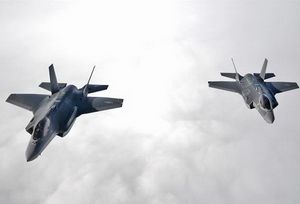
NATO. As part of NATO’s response to Russia’s increased military activity, NATO’s “Summer Shield” exercises continue in Baltic States. During the exercises on 24 April 2017, a pair of the newest F-35A aircrafts of the US Air Force for the first time carried out flights to Estonia. In total, eight F-35A aircrafts from the 34th Squadron of the 388th Fighter Wing of the US Air Force and of the 466th Squadron of the 419th Fighter Wing of the US Air Force Reserve (Hill Air Force Base, Utah) are temporarily stationed at the Lakenheath Air Base in the United Kingdom.
 |
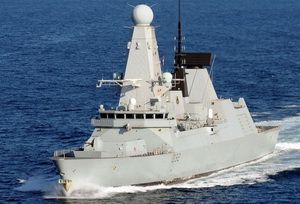 |
At the decision of the Warsaw Summit of the North Atlantic Treaty Organization (July 8–9, 2016), the NATO Military Command continues activities to ensure the permanent presence of the NATO Allied Forces in the Black Sea region. In particular, last week the Royal Navy destroyer HMS “Daring” entered the Black Sea.
3.2. Leading Western Countries
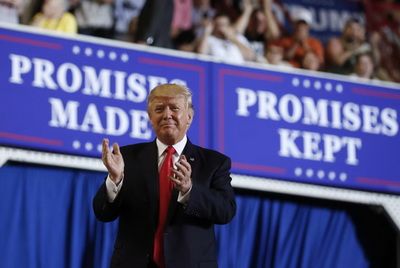 The USA. The 100th day of D. Trump’s presidency was April 29, 2017. A characteristic feature of this period was the beginning of the practical implementation by D. Trump of his strategic concept “America — above all!”. At that, his deeper acquaintance with the real situation in the world, as well as pressure from the US Congress, led to a shift in the priorities of the concept from the economic to the military-political sphere. As a result, the United States has actually moved to a stronger confrontation with Russia and those countries that threaten its interests and security. In this regard, the strategic nature of the US-NATO relations was also confirmed. In fact, a demonstration of the firmness of the USA’s position in the international arena was the test launch of the Minuteman III intercontinental ballistic missile from the Vandenberg airbase in California on the eve of the significant date of D. Trump’s being in the presidential post.
D. Trump’s actions to protect the economic interests of the USA have shown that there are significant contradictions and problems in this sphere. Thus, the strategic priorities of maintaining positive relations with China, as the world’s second most powerful country, made D. Trump abandon his pre-election intentions to impose restrictions on trade and economic cooperation with China. In addition, he canceled his previous decision to withdraw from the North American Free Trade Agreement with Mexico and Canada.
In fact, D. Trump has implemented only some of his pre-election promises in the domestic policy of the country, in particular, about strengthening the border with Mexico, suspension of the granting of permits for the entry of refugees from some problem countries, and introduction of more strict conditions for granting permissions to work in the USA.
The Netherlands. Despite the manifestations of Euro-skeptic and pro-Russian sentiments in certain political circles of the Netherlands, on the whole, the country’s leadership recognizes the existence of threats from Russia. According to the Netherlands’ intelligence, today the greatest challenges to European security are being created by international terrorism and Russia’s actions. In this regard, they first of all, point out Moscow’s efforts to destabilize the situation in the Netherlands and other Western countries, as well as its attempts to undermine the unity of the EU and NATO.
IV. Other Important Trends and Developments that Will Have an Impact on Ukraine’s National Interests
 |
 |
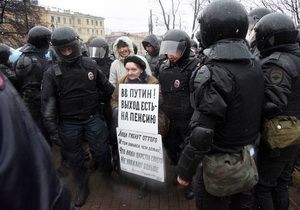 |
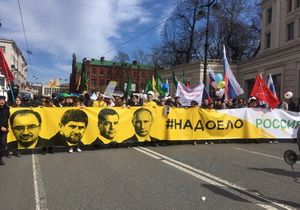
The Russian Federation. A characteristic feature of the May holidays in Russia was another series of protests organized by movements opposing the Putin regime. Thus, on 29th April 2017, in Moscow, St. Petersburg, Tula, Tambov, Kemerovo and other Russian cities, there was an action “Nadoel!”(”Sick and Tired of You!”) demanding that V. Putin should not run as a candidate for the fourth presidential term. The initiator of the action was the party “Open Russia” headed by M. Khodorkovsky. And on May 1, the Communist Party of the RF organized mass actions on the occasion of Labor Day, where the dissatisfaction with the socio-economic policy of the Russian government was voiced.
At this, there were some qualitative changes in the actions of the opposition, which begin to affect the foundations of the Russian government. Thus, the process of consolidation of different opposition movements, with the prospect of their joint participation in local elections, which are planned in some regions of Russia in the near future. This opens real prospects for changing the balance of political forces in the federal subjects of the Russian Federation and, accordingly, for weakening the Kremlin’s control over them. Besides, local legislative assemblies of the Republic of Tatarstan and Astrakhan region of Russia are siding with the opposition, having supported the demands of protesters.
Given these circumstances, the Russian leadership is increasing pressure on the opposition, trying to prevent its activities. To this end, the Kremlin resorts to repressions against protesters, spreads an information campaign to discredit opposition leaders, first of all A. Navalny, who has filed his candidacy for the presidency of the Russian Federation in preparation for the presidential elections in 2018.
The activity of foreign structures that support the opposition is significantly limited in Russia. Thus, on 26 April 2017, the General Prosecutor’s Office of the Russian Federation recognized as “non grata in Russia” some more foreign non-governmental organizations, including the “Institute of Modern Russia” (funded by the United States).
Another serious problem in Russia is the Islamic extremists’ growing activity in some areas of the country. According to the Director of the Federal Security Service of the Russian Federation A. Bortnikov, recently an increase in the number of centers of the “Islamic State” has been observed on the territory of the Russian Federation. Such centers have been identified in different regions of the country, including St. Petersburg, Dagestan, Astrakhan and even in Sakhalin.
Taking into consideration these circumstances, the leadership of the Russian Federation continues to build up the combat capabilities of the Federal Service of Troops of the National Guard of Russia (“Rosgvardia”). In particular, it was decided to equip the units of Rosgvardia with “Shmel” rocket-propelled flame throwers. As of today, 200 such flamethrowers are already in service in the units of Rosgvardia in the town of Balashikha outside Moscow. In fact, this shows the RF law enforcement agencies’ (which perform internal functions) preparations for using force in urban areas.
The Balkan Peninsula. The situation in the Balkan Peninsula is difficult, and some facts show that Russia is involved in provoking conflicts in some countries of the region. In particular, on 27 April 2017, the members of the nationalist movement “For a United Macedonia”, supported by Russia, attacked the building of the Parliament of Macedonia. The reason for this was the election of the ethnic Albanian Talat Xhaferi as the Speaker of the Parliament.
Provocations can continue in Montenegro. Thus, in response to the decision of the Assembly (Parliament) on Montenegro’s accession to NATO, the Russian Foreign Ministry made a special statement on Russia’s reserving the right to “take adequate measures in response”.
V. Major Trends in the Development of the Situation around Ukraine in the Future
5.1. Key Events and Trends that Will Be Most Important for Ukraine
Given the firmness of the positions of the USA, NATO, EU and Russia on the main problem issues in their relations, we can expect further aggravation of the confrontation between the West and the Russian Federation. At this, the USA and its Western partners will step up their pressure on Moscow.
US President D. Trump has stated that he will increase the opposition to the policy of Moscow, which seeks to strengthen its influence in the world arena. In this regard, the USA will maintain sanctions against it, and may also turn to new, more powerful means of containing Putin’s regime.
In particular, according to Russian experts, one of such steps could be “freezing” of Russia’s international assets held in US banks. At the same time, the USA could intensify the support for opposition forces in Russia. Besides, we should not rule out a possibility of the USA’s direct forceful actions against the allies of Russia, in particular Syria, Iraq and Iran, as well as providing Ukraine with lethal defensive weapons.
According to the supporters of the Kremlin, all this is being done to preserve the role of the United States as the sole leader in the world. Some internal reasons for changing D. Trump’s attitude to Russia are also noted. Thus, in November 2018 in the United States are going to be interim elections of the third of the Senate and completely — of the House of Representatives. Taking this into account, D. Trump is forced to maintain a tough course with regard to V. Putin’s regime, as demanded by most US political forces.
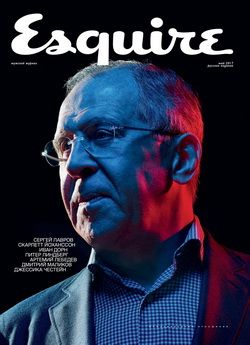 Such negative for Russia prospects are actually recognized by the Russian leadership. Thus, according to Russian Foreign Minister S. Lavrov, the current situation in international relations in many aspects is much worse than the one that was during the Cold War with the USSR. The reason was called “the USA and other Western countries’ refusal to play by clear rules, as it was the case during the global confrontation between the two opposing blocs”. At the same time, S. Lavrov pointed out the growing confrontation between the West and Russia, and also said that Moscow could come up with the initiative to create a new system of international security “with drawing by the RF “red lines” that no country would dare to cross”.
At the same time, according to S. Lavrov, unlike the former USSR’s, Russia’s current capabilities do not allow it to create adequate counterbalances to the West on the basis of a strategic balance of forces. More so, Russia continues to lose its international positions and economic potential. Taking into consideration these circumstances, S. Lavrov made a rather pessimistic forecast regarding the further situation around Russia (for which, by the way, journalists gave him the nickname “sad horse”).
5.2. Prospects for the Development of Events in the Conflict Zones in Ukraine
Given the immutability of Moscow’s policy towards Ukraine, we may expect that the Russians will continue armed provocations in the ATO zone in the Donbas. It is possible that, in connection with the plans of the UN International Court of Justice, to start the consideration of the essence of Ukraine’s claim against Russia, the latter will not conduct active offensive actions, limiting itself to medium-intensity shelling the ATO forces’ positions and peaceful settlements. At this, Moscow will be trying to hide its role in maintaining tension in the region.
In such a situation, it is possible that the Russian-terrorist forces will use the tactics of a “creeping” offensive in terms of trying to force out the ATO forces from the most important regions for the “DPR”/”LPR” on the Coastal, Donetsk and Luhansk directions.
Besides, there may be periodic intensification of the enemy’s actions, in particular, against the background of the Victory Day holiday. New provocative attacks on the staff of the OSCE Special Monitoring Mission in the Donbas are also possible. Each of these cases will be accompanied by the RF’s active information campaign with accusing Ukraine.
5.3. Other Important Events that Will Influence Ukraine’s Interests and Security
In the near future, the results of the second round of presidential (May 7, 2017) and parliamentary (June 2017) elections in France will be of particular importance for Ukraine. Judging by the results of the first round of the presidential elections, quite possible is the victory of the leader of the “Forward” movement, E. Macron. In this case, the policy of France will not undergo significant changes, including in the matter of supporting Ukraine and continuing pressure on Russia.
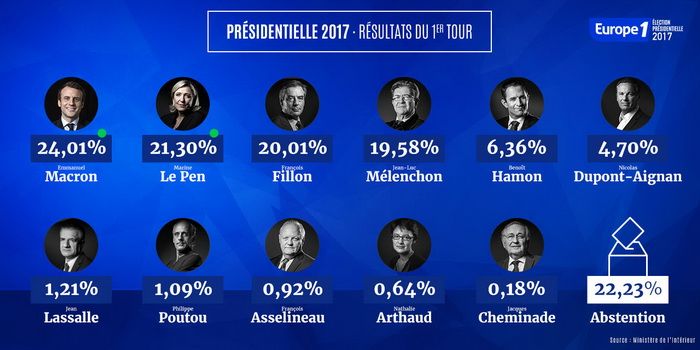
In this situation, the attempts of the leader of the “National Front” party M. Le Pen to improve her rating by mitigating critical rhetoric towards the EU are quite revealing. Besides, she withdrew from the party, which discredited itself by the frankly populist and pro-Russian politics. Such M. Le Pen’s steps can in some way affect the electoral process in France. This increases the unpredictability of the results, which will largely depend on the voters who had voted for other candidates.
The results of the presidential elections in France will also be an indicator of future parliamentary elections in that country.

